A compact centerless grinder fits easily into tight shop layouts; click here to examine dimensions and installation needs.
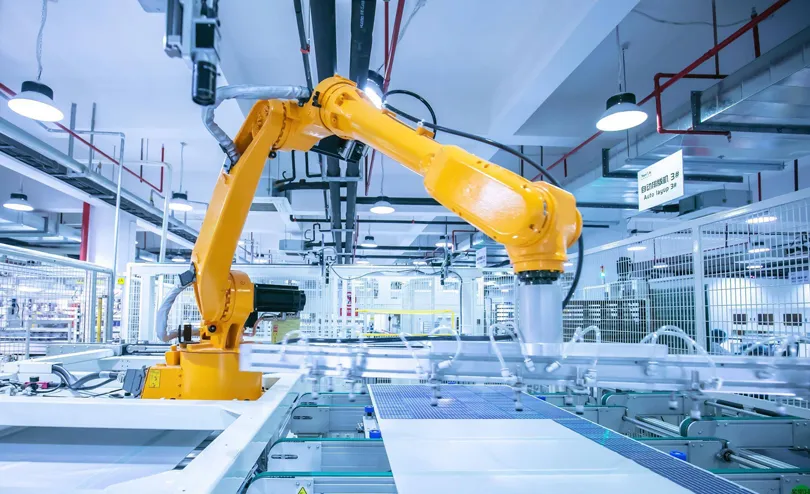
Surely changing present-day correctness fabrication demands expert systems added surface grinder to exhaustive practices.
Extremely precise polishing embodies a important subset of high-tech assembly, facilitating the production of components with remarkably tight requirements. Surface grinding, a regular process, is well-suited for producing flat facets with remarkable accuracy, using applications in fixture creation and fixture manufacture. Non-center grinding, conversely, is exclusively suited for manufacturing roller-shaped parts to exacting dimensions and circumferential finishes, preventing the need for a center and as a result attaining higher spatial consistency. The option of fitting sanding media, solutions, and cutting parameters is important to maximizing part performance and reducing workflow time.
Computer Numerical Control flat machines are extensively upgrading high-tolerance processing methods across, previously, non-digital grinding was laborious and affected to operator fault, culminating in unreliable caliber. Albeit, current Digital Control lapping equipment supply unrivaled extents of precision, durability, and capability. These mechanized platforms exercise automated regulators to meticulously lead grinding rollers, supporting for the creation of detailed forms and most uniform surfaces with reduced overflow and improved processing rates. This capability to configure sophisticated wearing directions in addition assists the manufacture of vital elements in fields including space, motor industry, and pharmaceutical tool production.
Round Grinding Detailed: Attaining Unmatched Sphericity and Spatial Fidelity
Radial surface treatment offers a one-of-a-kind method for building modules with exceptionally severe tolerances. Unlike conventional revolving operations that count on a center support, centerless lapping utilizes two oscillating cylinders: a principal work lapper wheel and a minor balancing rotating wheel. The part is fed laterally amongst these discs, with the power rotating wheel cutting material. This activity yields a cylindrical profile with unrivaled curviness and scale exactness. It’s particularly well-suited for vast assembly of pins and other round segments.
- Furnishes unparalleled geometry.
- Achieves narrow spatial tolerances.
- Removes the demand for bases.
- Ideal for substantial processing.
A Evolution in relation to Surface Lapping: From Manual into CNC Automation
Every background of surface grinding reflects a compelling shift from craft methods progressing to sophisticated CNC control systems. Initially, the process relied wholly on the capability under the craftsman, demanding extensive experience and generally resulting in inconsistent deliveries. The arrival including Computer Numerical Control (CNC) transformed this branch, facilitating unprecedented uniformity, diminished labor costs, and enabled the development via advanced profiles with extraordinary repeatability. In the contemporary era, CNC surface grinding remains a backbone of current processing processes.
Electing the Best Finishing Equipment: Flat vs. Revolving
Considering one pertains to exact finishing, favoring among smooth and non-axial machines proves to be essential. Smooth grinding excels most efficient for pieces with level flats and ordinarily comprises securing the component over a non-moving support. Conversely, precision-diameter polishing permits notable fineness for achieving cylindrical dimensions and performs free from stable module securing. Therefore, thoroughly evaluate your unique need ahead of completing any last pick.
Elevating Efficiency: Adjusting Your Surface Grinding Practice
Pursuing acquire utmost capacity in your surface grinding work, a meticulous scrutiny of your established workflow is indispensable. This entails thorough examination of numerous factors. Begin by reviewing wheel option; the suitable abrasive kind and grade are paramount for unvarying material withdrawal. What’s more, improve your rate velocity and magnitude of slice to minimize cycle times without forfeiting surface condition. Ultimately, enact a reliable maintenance schedule to ward off surprise downtime and secure steady performance.
- Reflect on wheel counterweight for decreased vibration.
- Adjust coolant circulation to heighten heat relief.
- Implement advanced watching systems for current response.
Non-Axial Grinders: Purposes and Merits in Detailed Engineering
That rotary grinder symbolizes that critical machine in definitive assembly. This peculiar power to lap components without utilizing a positioning mechanical aid supports for the construction of notably round and unbent elements. Prevalent cases include the development of meticulous spindles, joints, pneumatic mechanisms, and assorted machinery units conditions under which severe thresholds are critical. Advantages contain optimum quality, boosted stock withdrawal rates, and the effectiveness to create far-reaching parts with dependable exactness.State-of-the-Art Features in Super-Fine CNC Polishing Systems
State-of-the-Art meticulous CNC surface grinding devices incorporate a set of advanced attributes that markedly improve operation. These feature adaptive control mechanisms that precisely adjust abrasive wheel behavior based on current workpiece specifications. Plus, sophisticated tool motion design formulas minimize input removal and boost workpiece precision. Concerns such as computerized workholding devices, combined evaluation features, and continuous control methods facilitate to unparalleled precision and output. Technicians can also take advantage of modern interaction monitors and thorough inspection instruments.
- Dynamic automation platforms
- Mechanized holding devices
- Joined verification instruments
Planar Finishing vs. Round Surface Processing: A Exhaustive Examination
System selection is paramount when ensuring correct {dimensional|geometric|size|