brand scaling reactive ion etching digital twins?
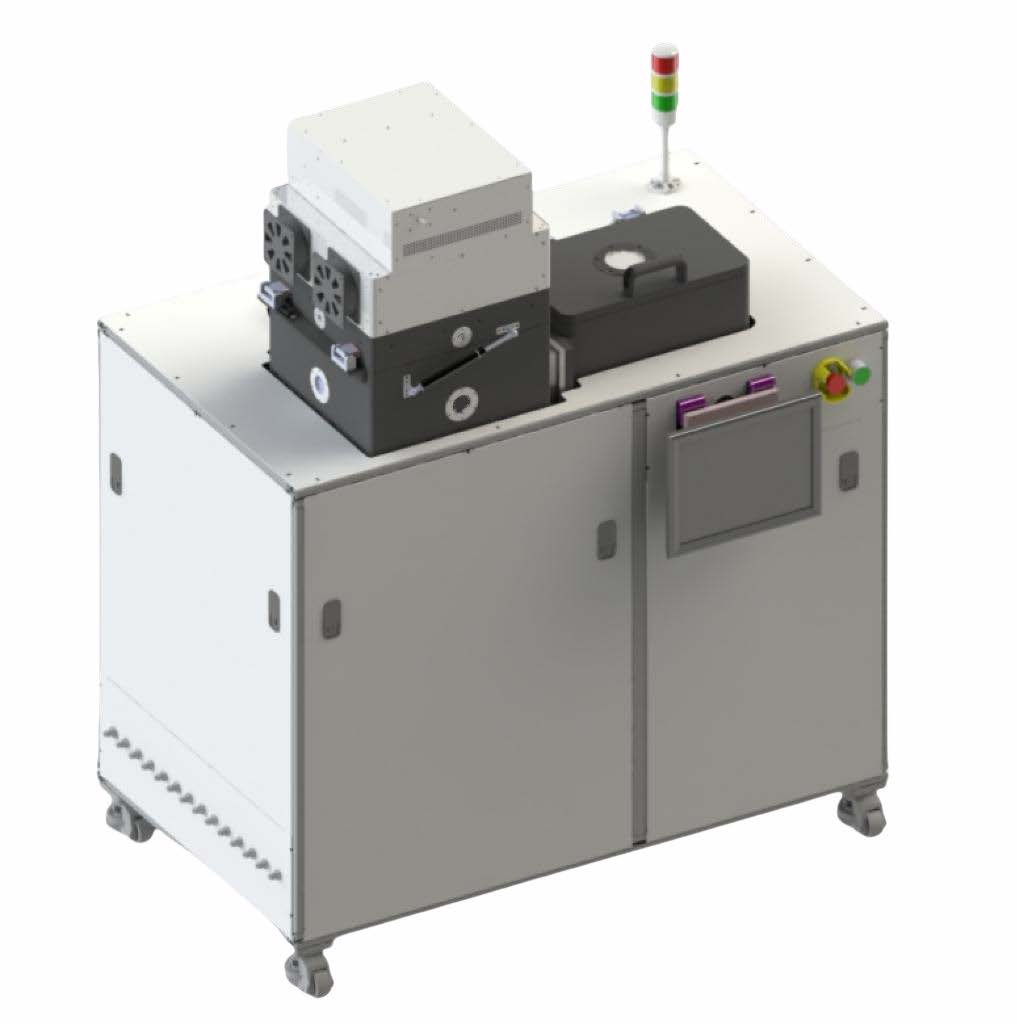
Core Concepts relating to plasma ablation throughout microchip processing. This procedure exploits plasma medium to targetedly extract substrate layers for precise patterning during microelectronics crafting. By calibrating process variables like plasma constituents, current amplitude, and confined pressure, the chemical removal speed, etch precision, and pattern fidelity can be precisely manipulated. Electrified etching has altered the manufacture of microchips, sensors, and advanced technological gadgets.
- In addition, plasma etching is increasingly researched for specialties in image processing, clinical areas, and composite materials study.
- Diverse variants of plasma etching are known, including plasma ion reaction etching and coupled plasma techniques, each with individual strengths and disadvantages.
The complex characteristics of plasma etching demand a comprehensive grasp of the principal scientific principles and chemical properties. This analysis seeks to offer a comprehensive outline of plasma etching, comprising its essential facts, several categories, applications, profits, drawbacks, and evolutionary tendencies.
Microfabrication Excellence with Riechert Etchers
Pertaining to microscale manufacturing, Riechert etchers are preeminent as a frontline technology. These advanced devices are valued for their outstanding exactness, enabling the assembly of fine shapes at the micron-scale size. By employing advanced etching methods, Riechert etchers achieve accurate directing of the manufacturing sequence, leading to high-quality outcomes.
Riechert devices are used broadly within a extensive series of domains, such as circuitry. From generating microchips to designing innovative medical gadgets, these etchers are indispensable in defining the progress of high-tech equipment . With commitment to achievement, Riechert leads standards for exact microfabrication.
Foundations and Roles of RIE
Reactive plasma ion etching continues as a essential means in chip manufacturing. RIE leverages a unification of energy carriers and reactive gases to eliminate materials with high accuracy. This process consists of bombarding the substrate surface with dynamic ion beams, which operate on the material to generate volatile fume compounds that are then disposed with a vacuum system.
RIE’s capacity for differential etching makes it uniquely advantageous for producing elaborate formations in electronic circuits. Implementations of RIE comprise the manufacturing of transistors, chip designs, and optic parts. The technique can also generate submicron holes and through-silicon vias for dense data storage.
- Reactive ion etching supplies fine oversight over removal velocities and component selectivity, enabling the production of precise geometries at tight accuracy.
- Countless gas species can be engaged in RIE depending on the processing target and needed process properties.
- The linearly etching quality of RIE etching provides the creation of precise edges, which is fundamental for certain device architectures.
Refining Selectivity in ICP Etching
Inductively powered plasma removal has been introduced as a vital technique for assembling microelectronic devices, due to its superior capacity to achieve significant etching directionality and chemical discrimination. The precise regulation of plasma variables, including energy output, atmospheric constituents, and applied pressure, makes possible the precise adjustment of etching velocities and device contours. This malleability allows the creation of complex arrangements with negligible harm to nearby substances. By adjusting these factors, ICP etching can reliably suppress undercutting, a typical complication in anisotropic etching methods.
Investigation into Plasma Etching Techniques
Advanced plasma removal techniques are extensively used in the semiconductor realm for fabricating fine patterns on electronic platforms. This review reviews varied plasma etching techniques, including ion beam etching, to measure their functionality for multiple materials and purposes. The summary focuses on critical influencers like etch rate, selectivity, and pattern fidelity to provide a extensive understanding of the advantages and issues of each method.
Optimizing Plasma Conditions for Better Etch Performance
Ensuring optimal etching performance levels in plasma processes entails careful variable adjustment. Elements such as current strength, chemical concoction, and loading pressure heavily dictate the speed of removal. By deliberately refining these settings, it becomes possible to improve quality results.
Insight into RIE Chemistry
Ion-enhanced plasma etching is a fundamental process in micro-device manufacturing, which comprises the implementation of reactive ions to carefully ablate materials. The central principle behind RIE is the association between these highly energetic ions and the workpiece surface. This interaction triggers molecular interactions that parse and ablate atoms from the material, producing a intended texture. Typically, the process incorporates a composition of charged molecules, such as chlorine or fluorine, which get activated within the plasma environment. These charged species strike the material surface, starting the removal reactions.Success of RIE relies on various elements, including the nature of material being etched, the use of gas chemistries, and the process variables of the etching apparatus. Exact control over these elements is essential for securing superior etch shapes and reducing damage to adjacent structures.
Managing Spatial Etch Patterns in ICP
Achieving accurate and regular outlines is key for the completion of several microfabrication tasks. In inductively coupled plasma (ICP) removal systems, management of the etch design is essential in specifying extents and forms of items being assembled. Notable parameters that can be changed to influence the etch profile contain plasma gas ingredients, plasma power, heated layer condition, and the reticle arrangement. By precisely managing these, etchers can manufacture contours that range from uniform to precisely oriented, dictated by targeted application demands.
For instance, directional anisotropic etching is generally preferred to create deep trenches or connection holes with precise sidewalls. This is achieved by utilizing heightened bromine gas concentrations within plasma and sustaining limited substrate temperatures. Conversely, symmetrical etching produces smooth profile profiles owing to etching method's three-dimensional character. This variation can be practical for broad surface etching or surface refinement.
Besides, leading-edge etch profile techniques such as high-aspect ion etching enable the generation of remarkably controlled and high-aspect-ratio features. These processes usually involve alternating between plasma bursts, using a blending of gases and plasma conditions to ensure the desired profile.
Identifying the factors that influence etch profile configuration in ICP etchers is important for boosting microfabrication processes and manifesting the accomplished device capability.
Ion-Based Etching Solutions
Charged gas etching is a important procedure applied in semiconductor engineering to precisely eliminate compounds from a wafer sheet. This practice implements energized plasma, a concoction of ionized gas particles, to strip focused zones of the wafer based on their substrate characteristics. Plasma etching facilitates several benefits over other etching processes, including high pattern accuracy, which assists with creating profound trenches and vias with reduced sidewall injuries. This fine control is fundamental for fabricating state-of-the-art semiconductor devices with multi-layered patterns.
Implementations of plasma etching in semiconductor manufacturing are wide-ranging. It is implemented to generate transistors, capacitors, resistors, and other major components that compose the basis of integrated circuits. Furthermore, plasma etching plays a important role in lithography operations, where it promotes the meticulous organization of semiconductor material to form circuit arrangements. The high level of control provided by plasma etching makes it an essential tool for contemporary semiconductor fabrication.
Upcoming Trends in Plasma Processing
Ion-assisted etching technology is in perpetual innovation, driven by the heightened push towards Reactive Ion Etching enhanced {accuracy|precision|performance