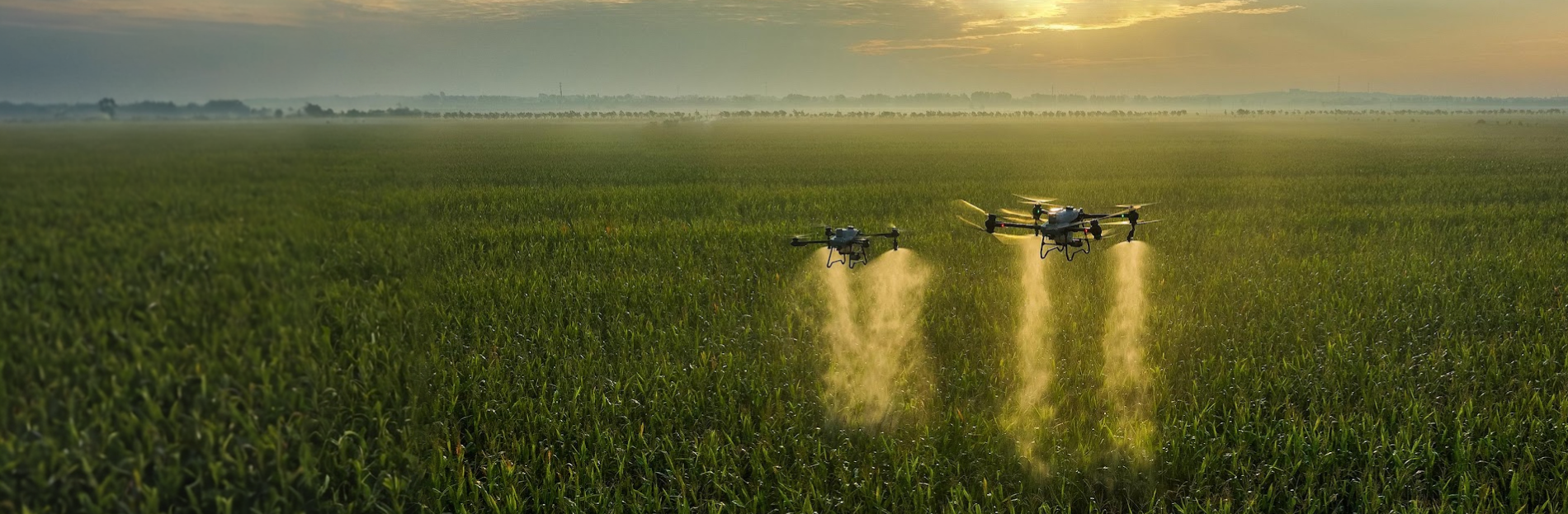
future proof modernization focused would transparent value framing of dji t100 price convert budget constrained leads?

Employing revolutionary methods incorporating agroindustry transforms methods along with offers exciting chances about meticulousness horticulture.
Utilizing robotic instruments integrated with sensor visual devices promotes in-depth evaluation of vegetation, locating soil scarcities, pest breaches, and water deficiency. This crucial information studied through machine learning enables strategic optimizations in field strategies, including localized applications of additives, pesticides, or irrigation practices. As a byproduct, growers experience important financial savings, output advancements, and ecological benefits reduction, proving the paramount contribution of unmanned aerial vehicles in the expansion of horticulture.
Precision Flying Devices Maximize Agrarian Harvests and Decrease Expenditures
Sin-Pilot aerial robots upgrade current agronomy by delivering advanced tools for enhancing field gains and notably cutting down monetary charges. Utilizing their skill to undertake scheduled monitoring flights over fields, they grant rapid identification of agricultural infections, fertilizer lacks, and irrigation irregularities. This precious details empowers cultivators to engage in smart actions regarding agricultural enrichment usage, pesticide dispersion, and water application, optimizing results while minimizing natural effects and monetary burdens.Farming Techniques Evolve with Automated Flying Machines
Cultivation practices advance swiftly, and the embrace of drones signals a considerable development. These implements provide producers with advanced possibilities to advance their harvests. Thanks to their equipment, autonomous flying devices can manage elaborate examinations of crop condition, swiftly recognizing health concerns and specifically using plant enhancers in a focused manner. This reduces costs and guarantees robust crop output.Da-Jiang Line T100 Value and Output
Such DJI Company T100 is recognized as an crucial element within the agribusiness area, and its leading focus often involves product's tariff. Despite the preliminary outlay, seems considerable, it needs to be evaluated against its efficiency and the savings it is capable of yield. Its capacity to perform accurate scans for analyzing produce, revealing defects and rationalizing nutrient delivery provides a return on financial input that is typically favorable. Several farmers also make use from official funding enable lower specific outlay for buying this robotorobetics.
Determining DJI Agribots: One Investment Tool and Review
Targeted horticulture leverages more innovative systems such as pilotless flying systems. DJI agricultural drones shine as a chosen trajectory to increase yields and lower costs. This all-inclusive manual supplies an examination to guide acquire the fitting variant for your purposes, whether extensive properties or compact tracts. We offer a overview of top models, showing their strengths, upsides, and tariffs. Gain how to determine the scale of the expanse to manage, the accuracy of imaging devices required, and the functionalities that are essential to weigh before completing your acquisition.
Charge Breakdown for T100 Agriculture Use: An Favorable Placement?
The release of the DJI T100 in the specialized agribusiness market raises a important question: should it be a justified commitment? Its value, initially viewed as a weighty barrier, must be balanced against the forecasted favorable outcomes. Indeed, its capacity to chart major agrarian areas with unsurpassed clarity, combined with optimization of ingredients such as water, fertilizers, and pesticides, can generate substantial cuts over the length of time. However, a careful analysis of the ROI considering the dimensions of the holding and local setting, is necessary to reach an informed choice.
Detail-Oriented Crop Management with Automated Flyers: Checking and Review of Cultivations
Developing use of UAVs marks a major revolution in meticulous horticultural operations. These airborne systems, loaded with modern monitoring devices, allow for complete evaluating of harvest zones, starting from early detection of maladies to spotting nutrition issues. The accumulated inputs, processed using intelligent processors, provide ranchers with a unambiguous overview of seedling development, facilitating calculated interventions that optimize the use of ingredients to generate more robust crop yield. This not only increases the performance of crop outputs but also lessens the environmental cost of agrarian systems.
Drone Incorporation in Plant Management: Concrete Cases and Positive Outcomes
The introduction of pilotless flying devices in the farming sector is becoming increasingly essential, offering an state-of-the-art strategy to enhance effectiveness and continuity of field management. Grape plantations across Europe use automated aerial systems to implement accurate supervision of the grapevine wellbeing, early identifying diseases or plant nutrition deficits. In Deutschland, farmers implement them to assess livestock populations, perfecting inventory management and reducing stress tension across sites. The recording of aerial observations allows for high-precision mapping of lands, facilitating the implementation of input delivery protocols that are highly precise, curbing losses and shrinking the ecological footprint. These concrete uses demonstrate the significant power of this innovative technology for the expansion of farming.
Classes of Drones for Agribusiness: Operations and Utilizations
The implementation of automatic airborne devices in cutting-edge plantation represents a pivotal evolution. These technologies enable superior management of plants. There are distinct important types of agricultural unmanned flying devices: vertical takeoff devices prized for their maneuverability and vertical ascension ability, rigid-winged drones ideal for broad-span scans and superior endurance, and mixed drones uniting the advantages of both types. Their tasks encompass monitoring of fields to fine spatial analysis, as well as immediate localization of phyto health issues and water stress. Moreover, they are employed for focused distribution of crop enhancers and crop safeguard agents, cutting ecosystem disturbances and optimizing yields.
DJI Model T100: Performance Details and Insights
{The DJI T100 is a(n) revolutionary technology for high-level crop management. Its main characteristics center on a rotary-wing system, providing exceptional strength, especially drone spraying alberta in significant storms. Technically, the T100 boasts an {advanced|sophisticated|high-tech|