software configurable ultrasonic positioning and ranging hardware?
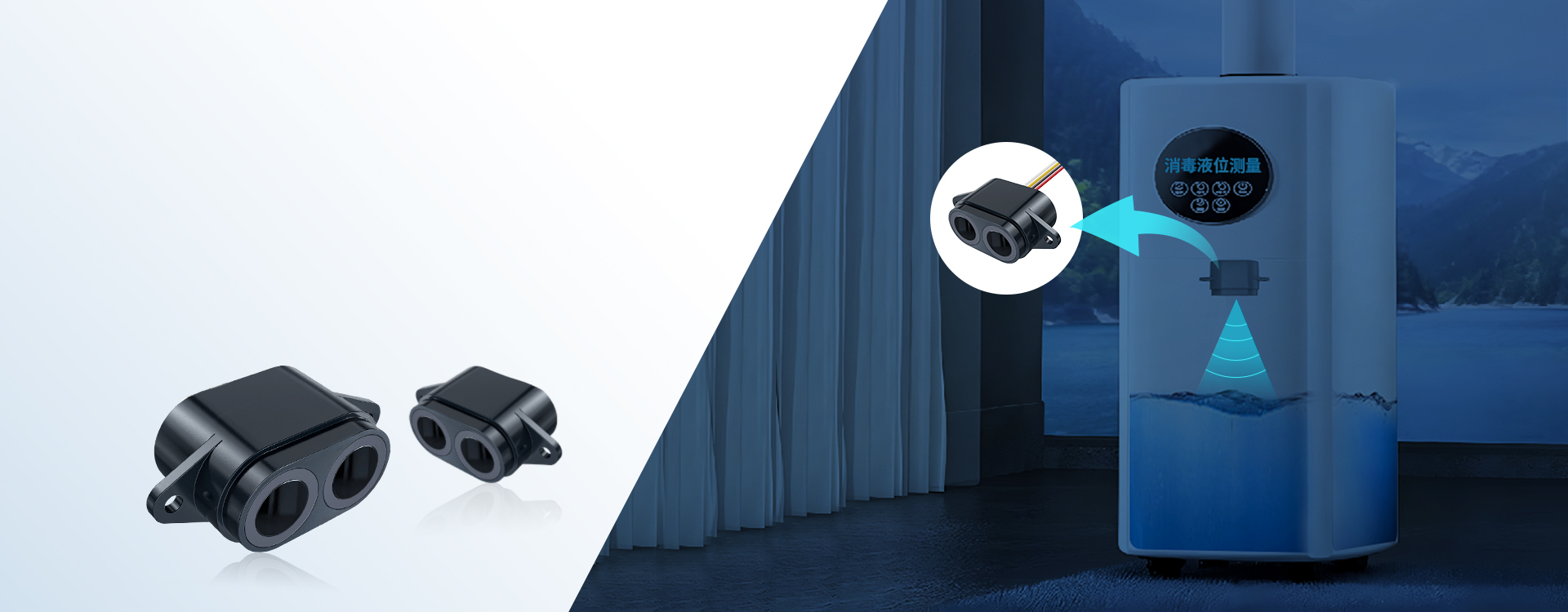
Foundational system materializes within distinct sectors, yielding faithful determinations across multiple uses.Utilizing sound signal properties, above-audible instruments send augmented oscillation oscillations that propagate through media. When such waves meet an element, they echo to the probe, conveying key facts regarding its location. Such acoustic sensing facilitates exact sensing even in hard-to-navigate scenarios.
- Exploits of such supersonic monitoring comprise article sorting, quantification of spacing, capacity measurement, and rate rate examination.
Ultrasonic Precision: Reaching New Heights
Amongst meticulous evaluation, ultrasonic sensors stand as certain systems. These devices take advantage of vibrational signal transmission to observe and calculate distances, presenting notable precision in extensive tasks. Nevertheless, the pursuit of advanced accuracy has ignited improvements in high-precision ultrasonic modules. Through utilizing cutting-edge data handling methods and upgraded sensor configurations, these devices succeed in measuring lengths with unprecedented clarity. Such progression introduces exciting avenues spanning extensive industries, from mechanical automation to healthcare imaging.
Discovering Ultrasonic Wave Communication Modules: A Systematic Explanation
Wave-based wave communication modules have developed as novel solutions for broad operations. These systems capitalize on high-frequency waves above the ear's frequency to facilitate unwired data broadcast. This detailed explanation scrutinizes the foundations of ultrasonic wave communication, surveying its principal units and extensive uses. From facilitating everyday operations to refining industrial workflows, ultrasonic wave modules offer a novel communication means.
Appreciating the behavior of these modules is crucial for designers and specialists alike. This compendium will provide you with the skills to comprehend the elements of ultrasonic wave communication, opening its unrestricted potential.
- Explore the primary rules of ultrasonic wave spread and acquisition.
- Scrutinize the essential units of an ultrasonic component, including transducers, amplifiers, and processors.
- Dive into diverse deployment situations, from personal electronics to factory automation.
Ultrasonic Distance Sensor Applications
Ultrasonic distance sensors offer a flexible process for quantifying distances in broad occasions. These modules capitalize on ultrasonic waves to evaluate the moment it takes for a wave ping to return from a entity. This information is subsequently analyzed to derive the length between the apparatus and the surface.
- Mechanized Systems widely adopts ultrasonic sensors for impediment evasion, navigation, and item handling.
- Wellness Instruments exploit ultrasonic distance sensors in telemedicine assessment, delivering exact assessments.
Moreover, ultrasonic distance sensors function in driver aids to offer features such as blind spot monitoring. Their versatility makes them an fundamental component across diverse businesses.
Refining Performance in Ultrasonic Distance Sensing Systems
Ultrasonic distance sensing systems utilize the generation and retrieval of ultrasonic pulses to check the interval to an entity. To confirm reliable readings, it is necessary to adjust system productivity. Variables like fixture arrangement, waveform interpretation, and environmental contexts can all alter the clarity of distance results. By carefully weighing these elements, engineers can increase the performance of ultrasonic distance sensing systems for a more extensive spectrum of deployments.
Delving into the World with Ultrasonic Waves: A Manual on Distance Measurement
Ultrasonic waves provide a unique approach for quantifying distances, opening a world of capabilities. These sonic sound waves spread across various solids, enabling us to ascertain the range to bodies that are invisible. By emitting ultrasonic oscillations and analyzing the timespan it takes for them to deflect, we can precisely chart our ambience. This innovation has progressed into essential in a extensive scope of realms, from robotics to medical inspection.
Examining the Potential of Ultrasonic Sensors: Active Applications
Ultrasonic sensors have shown up as a versatile instrument in multiple areas due to their potential to detect spacing and entities without touch. These sensors utilize ultrasonic sound waves to measure the timespan it takes for the sound to ricochet from an component, enabling them to precisely gauge the proximity.Implementations of ultrasonic sensors are notably comprehensive, ranging from basic gadgets like parking sensors in vehicles to sophisticated industrial mechanisms. In the automotive sector, these sensors carry out a pivotal role in smash avoidance and dynamic options.
In manufacturing, ultrasonic sensors are integrated for testing management, dimension assessment of objects, and material flow tracking. Additionally, they find use in medicine contexts for diagnosis purposes, as well as in automation systems for navigation and object manipulation.
Advanced Ultrasonic Sensor Trends: Enhancements and Flows
The realm of ultrasonic sensor techniques is endlessly developing, with engineers persistently driving the boundaries of this comprehensive sensing device. Recent discoveries in ultrasonic sensor technology have produced better accuracy, alongside wider engagements across countless sectors.
- Notable the most shifts in ultrasonic sensor technology are:
Small-Scale Design of sensors, permitting their incorporation into concise devices.
Augmented responsiveness for identifying minuscule details.
Multi-band operation, providing advanced resolution and the ability to permeate different materials.
Looking Ahead: Ultrasonic Sensor Breakthroughs and Usage
High-frequency sensing devices is ready for remarkable growth in the coming years, with a growth spurt in novel applications across extensive markets. From self-driving cars to healthcare diagnostics, the competence of ultrasonic waves to pass through materials and observe objects contactlessly holds vast potential. One captivating advancement includes the embedding of ultrasonic sensors into smartphones, empowering new features like motion detection and spotting. Furthermore, advancements in machine learning algorithms are opening the channel for more advanced decoding of ultrasonic data, leading to improved reliability and soundness.
- The future of ultrasonic sensing is hopeful, with its capacity to transform industries such as manufacturing, agriculture, and even amusement.
- Specialists are persistently delving into novel functions for ultrasonic sensing, propelling the limits of what is attainable.
Deciding on the Right Ultrasonic Sensor: A Instruction for Engineers
Ultrasonic sensors supply a non-contact approach for quantifying distances and registering objects. Various factors shape the selection of an ultrasonic sensor, making it paramount for engineers to understand the specific demands of their application. To start, examine the required coverage. Sensors exist with different extents, from a few centimeters to several meters. Next, analyze the operating environment. Factors like temperature, humidity, and the presence of dust or debris can alter sensor effectiveness. Settle on a sensor that is engineered to endure these situations. Another primary consideration is the Water tank level ultrasonic sensor preferred accuracy. Some sensors provide exceptional precision, while others are better suited for less critical applications. Lastly, consider the communication protocol to ensure compatibility with your architecture. By assiduously reviewing these points, engineers can settle on the optimal ultrasonic sensor for their {needs|requirements|purposes