trend aligned wording for smart village initiatives risk aware plant protection uav operations for disease hot spots?
The utilization of aerial drones in crop management is dramatically altering strategies to watch over crops, starting a new phase of tailored farming. These cutting-edge solutions, equipped with high-resolution sensors, afford notable clarity on farming scenarios, advancing beyond usual strategies. Cultivators can spot troubles such as illnesses, nutrient deficiencies and irrigation problems with rapidity and meticulousness, providing directed responses limiting waste and amplifying output. Surpassing fundamental viewing, unmanned aerial vehicles craft comprehensive three-dimensional models of lands, yielding fundamental facts to optimize crop arrangements and fertilizer spreading, in the end enabling resilient and revenue-rich farming undertakings. This innovation’s uptake favors vast agricultural businesses while gradually extending to minor cultivators striving to improve their outputs
Refined Crop Management with UAVs: Recent Developments
Land management zones see profound redevelopment, largely driven by the adoption of unmanned aerial vehicles. These advanced tools start a phase of exact cultivation, bettering established approaches affording excellent comprehension of crop vigor and resource operation. Unmanned platforms carrying highly developed devices like spectral and thermal imagers promptly amass large-scale metrics on plantations. Conveying producers thorough reports on flora condition, irrigation insufficiency, and pest attacks. This vital intelligence makes possible fine-tuned interventions, such as targeted nutrient supply, watering changes, and pest management, minimizing excess and maximizing returns. Following plant maturation all season long affords novel intelligence, underpinning resource-wise and financially rewarding farming habits. Furthermore, the ease of UAV data acquisition significantly reduces the time and resources needed for traditional scouting, freeing up farmers to focus on other aspects of their business. Future agribusiness definitively hinges on steady UAV innovation and assimilation
Farming Application UAVs: Effectiveness and Exactness
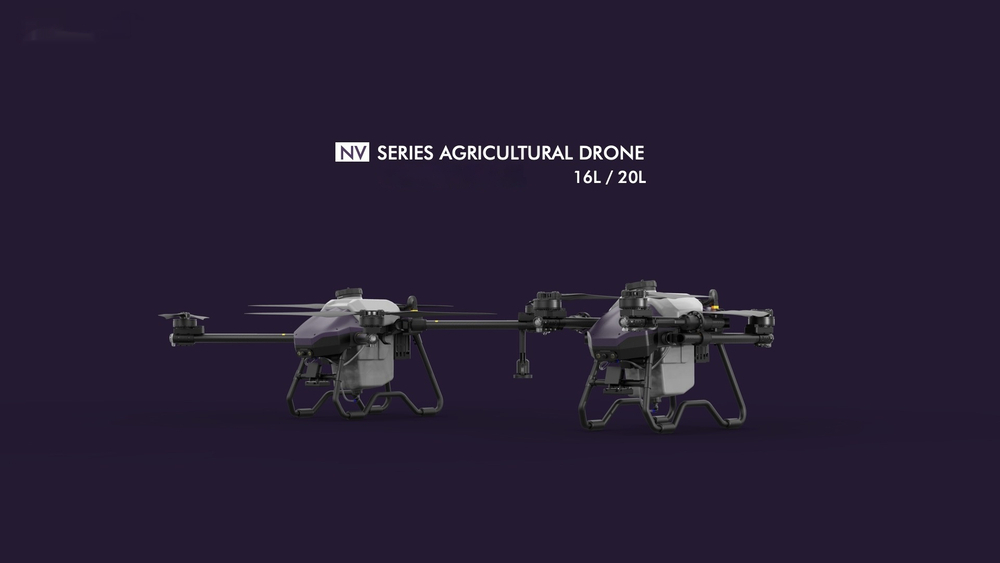
Utilization of unmanned spraying devices is shifting modern cultivation approaches. Formerly, agricultural protection utilized manual chemical spraying or tractor-based setups, generally resulting in considerable loss and nonuniform coverage. Nonetheless, utilizing aerial treatment platforms provides unmatched performance and exactness. The machines swiftly chart farmlands, pinpoint zones requiring targeted action, and administer nutrients or herbicides with exceptional exactness. In this way, agent deployment reduces, minimizing natural impacts and spending, and encouraging productive and sustainable cultivation. Moreover, drones’ capacity to function in adverse climates or challenging terrains offers growers an essential benefit
Crop Safeguarding Drone: Defending Your Yield
The advent of targeted cultivation has started a novel period of yield supervision, with agricultural safeguarding flying devices as the spearheads, often termed drones. The outstanding apparatuses offer robust instruments to cultivators targeting loss reduction from vermin, sicknesses, and undesirable vegetation. Fitted with elaborate detection modules and spray systems, they sharply target vulnerable patches, considerably lessening extensive pesticide requirements. In consequence, it improves yields and backs an eco-compatible nourishment growing tactic, protecting flora and human fitness. Equally, expeditious and efficient UAV chemical deployment allows rapid mitigation of developing hazards and minimizes labor expenditures, securing agriculturalists an economic advantage
Unmanned Field Solutions: Elevating Production and Trimming Expenses
The modern landscape of agricultural production is undergoing a significant transformation, mostly motivated by implementation of remote aerial flyers named UAVs. These robust instruments provide an array of options for growers, allowing them to enhance outputs and cut running expenses. From precise crop monitoring and early detection of disease infestations to targeted application of fertilizers and irrigation strategies, UAVs provide a level of insight previously unattainable. Correspondingly, data-fueled intelligence garnered by aerial imagery advocates for smart rulings, supporting eco-friendly conduct and augmenting farming earnings. This technology isn't just a trend; it’s quickly becoming an essential component of modern agricultural management
Drone-Based Crop Scouting: Early Detection, Targeted Intervention
Modern agriculture is rapidly embracing innovative technologies, where UAV-assisted field inspections emerge as genuinely game-changing instruments. Leveraging air-view images with enhanced computation, aerial vehicles deliver exceptional capacity for early observation of crop distress before visible manifestations. Rapid recognition facilitates growers’ execution of targeted adjustments including irrigation control, fertilizer dispersion, or pest elimination, reducing deficits and enhancing productivity. Ability for fast assessment of broad crop grounds through detailed imaging drastically enhances farm workflows and nurtures sustainable agriculture. Equivalently, regular drone scouting delivers important evidence for preserving historical plant condition files, promoting savvy farming resolutions over growing cycles
Optimizing Crop Care: Drones and Chemical Decrease
The swelling market of focused plant cultivation performs important restructuring motivated by drone dispersal methods. Such contemporary gear affords outstanding performance for distributing pest control chemicals, fertilizer, and critical care products onto arable land. The pivotal merit is the precision approach to affected patches, eliminating needless overdosing which often leads to chemical waste and habitat deterioration. Growers presently chart their farms with precision, pinpointing regions needing focused care, resulting in marked cuts in chemical consumption—a gain improving finances and environmental wellbeing. Besides, findings gathered by flying devices contribute to making sound planting determinations, nurturing environmentally compatible and effective crop production. Such progress reflects a major elevation in input application and green supervision within farming communities
Flying Devices for Agricultural Health Analysis
Drone platforms quickly overhaul crop vitality assessment techniques. Offering an unprecedented level of detail and efficiency compared to traditional methods. Surpassing straightforward visual assessments, these tools integrate complex sensors featuring multispectral, hyperspectral, and thermal technologies, supporting enhanced analyses. Collected metrics permit accurate detection of plant pressures such as nourishment shortage, infection emergence, and moisture deficit, often preceding visible signs. Also, aerial imagery combined with computational learning methods produces intricate plant indices and predictive analyses, permitting focused remedies and efficient resource distribution. Opportunity for prompt wide-area examination alongside fine data importantly upgrades analysis accuracy and promotes precautionary, green farming, boosting crop performance and curtailing environmental damage. Priority grows on live data utilization fostering swift reaction capabilities to recognized difficulties, transitioning methods from reactive to proactive responses
Precision Agriculture Drone Applications: A Comprehensive Guide
The growth of remote flying craft deeply alters precision farming scenery. Such state-of-the-art platforms supply producers unequaled potential in monitoring farm health, coordinating resource application, and maximizing returns. Beyond simple photographs, contemporary agrarian drones include advanced sensing, featuring multispectral, hyperspectral, and heat-detecting cameras, facilitating detailed analysis of crop vitality, strain, and moisture needs. Results achieved enable construction of detailed crop health markers, spotting affected or pest-attacked sectors, and assessing plant density, assisting efficient and sustainable agronomy. Moreover, remote aircraft aid in precise dispersal of herbicides and fertilizers, lowering surplus and reducing environmental damage, offering near immediate crop condition views for timely action and data-guided decisions which were once inconceivable
Optimizing Produce Defense Utilizing UAVs
The incorporation of flying device platforms is greatly enhancing tactics for crop preservation. {Traditionally, assessments of field health have been laborious and often reactive, relying on sporadic ground checks|Historically, evaluations of agricultural conditions were tedious and mostly reactive, based on occasional on-site inspections|Conventionally, examinations of crop status were time-consuming and frequently reactive, dependent on intermittent land surveys|In the past, inspections of cultivation wellbeing were demanding and regularly reactive, relying on scattered field observations|Previously, appraisals of farm condition were burdensome and uav drone agriculture often reactive, founded on irregular ground assessments|Earlier, analyses of plantation health were cumbersome and frequently reactive, relying on occasional terrestrial checks|Formerly, scrutiny of agricultural status was slow and typically reactive, based on periodic